Episode 002 - Soraya ‘Montana Red’
Background:
A while ago, I attended a group photoshoot, where multiple photographers are matched different models. It was my first experience and I truly enjoed it.
Through that I was able to connect with other photographers and models.
As it was my turn to shoot with ‘Montana Red/ (as her IG alias), we ended up having some awesome conversations, as well as bonding over the fact that we are both ‘metal heads’ :) I had a lot of fun shooting with Red, and through out conversation I learned that she as well as being an amazing model, works full time as a nurse.
I was really curious as to learn more about her experience being on the front line over the past few years, and what it means for her to work in the medical field.
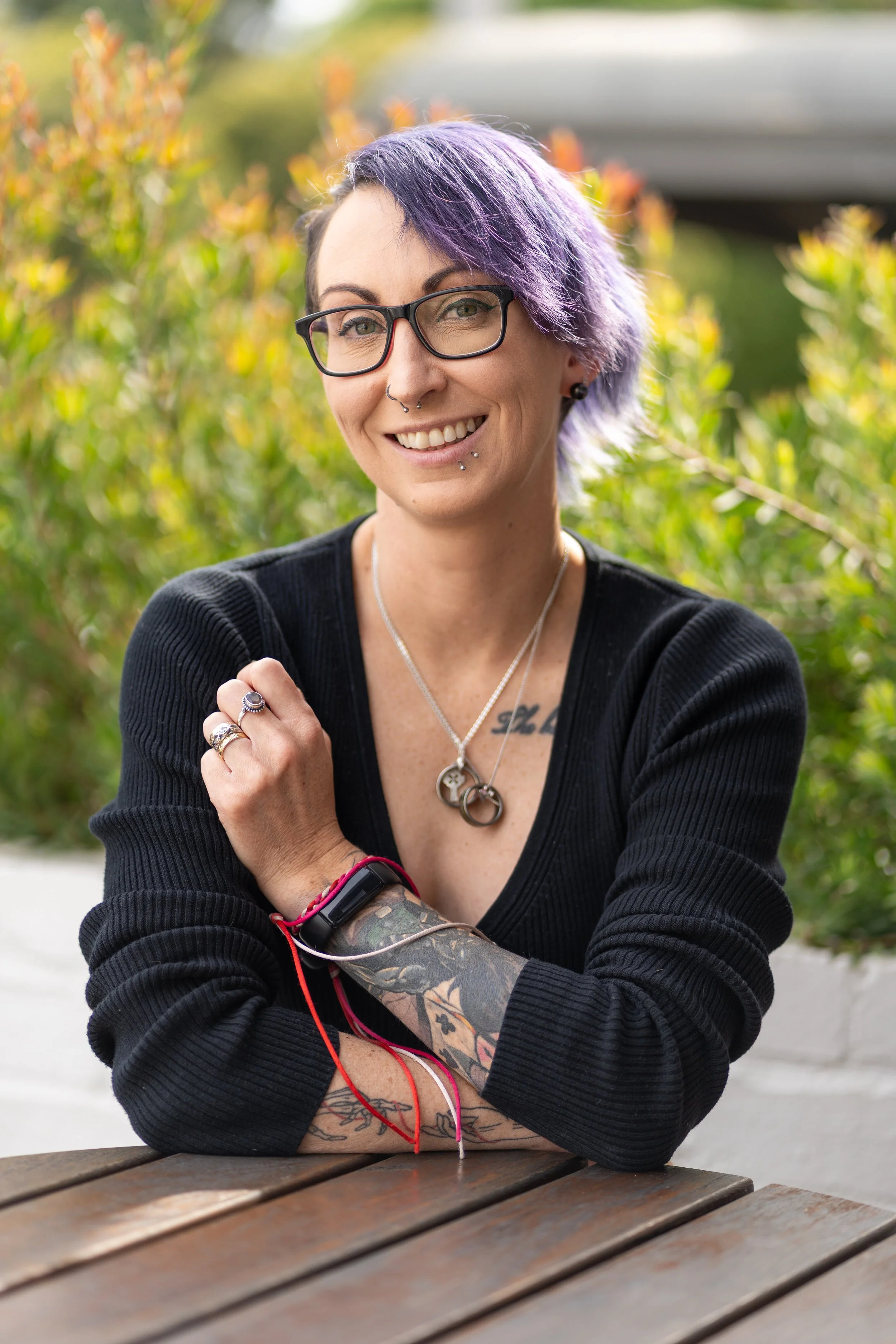
This interview took place at at the Convoy cafe in Monee ponds and park near Soraya’s home, in Melbourne, Australia, on the 2nd of November, 2024.
[Ahmed] Please introduce yourself.
[Soraya] Hi I'm ray. Or real name is Soraya much AKA Montana Red.
[Ahmed] What’s the reason behind the name?
[Soraya] Well, my family's Scottish, but my mum heard it, and really liked it. So, Scottish background, with an Iranian name.
[Ahmed] It has an interesting meaning, I think, it has to do with either lanterns or things that light the way.
[Soraya] It depends. I know there's different versions of it and.
Every time I get an Uber, I get told a different meaning depending on the nationality of the person picking me up and I've been told that it means graceful. I've been told in by another one that it can mean Princess or royalty, things like that, neither of which are very fitting for me. I fall over like a stick in the streets, so graceful doesn't really fit. There's a there's a lot of connotations behind it. People see the name and then see me. And there's a little bit of confusion, a lot of the time.
[Ahmed] So, what about Montana Red?
[Soraya] See, this is one of my favourite stories.
Back when I was nursing in Brisbane, a very, very long time ago, I was the team leader in a nursing home and we had this very unwell lady. She came in with a an advanced form of cancer.
And I was wearing red tart and Doc Martins and I had black hair with a big red stripe in it, and she couldn't say my name, so she just started calling me Montana Red.
[Ahmed] And that stuck since!
[Soraya] It's stuck. Yeah, and when I left, she got this little necklace made. And it's just this little character with black hair and glasses and maybe scrubs.
But I just take everywhere with me.
She was a beautiful, beautiful lady, and it's just stuck. It just seems to fit.
[Ahmed] So, what do you do for work?
I'm a nurse. Night shift nurse.
[Ahmed] Could you take me through you journey from the beginning to where you are now, like from a career perspective.
[Soraya] Oh, it's going to sound so cliched and boring, but it was that one little random kids at school when we had the police and the firies come in Grade 2 and everyone asked us what they want to be and everyone was like “I want to be an astronaut”, “I want to be a pilot.”
I'm just like, I just help people. So it kind of went from there and I couldn't decide if I wanted to do be do my medicine or just go into nursing.
And unfortunately, my school grade hindered me from doing medicine. So I went and did nursing instead.
At 17 and it's just continued on from there, far too long than I care to admit.
[Ahmed] What are the things you enjoy the most about your job?
[Soraya] Weirdly enough, it's getting, especially on the night shift, this has been my favourite part about night shift is that more often than not you actually get the chance, especially in the morning to sit down and get to know your patients.
Like I like to bring them a cup of tea with their morning meds and have a bit of a chat and get to know them as a person and not just uh, they're my patient.
I like the sort of autonomy behind it, there's always something new.
Always something new. The new machines I don't like, but the new methods in care and things like that I do quite enjoy.
[Ahmed] And is it part of the nature of your job that you see that patient multiple times over a period of time?
[Soraya] Generally speaking, we do try to keep consistency with the patients we look after and if I'm doing 3 shifts a week, depending on what we I'm on, I will usually have the same patient.
It's good for the patients, and it's good for us.
We get to know their little quirks. There's a safety reason as well like we know what they like, how they work and things like that. It's hard to explain like I can see it in my head, like it's easier for us because we know what time are their meds, and things like that. But we also know their routine. So we know that our this time of morning, they like to get up. So when they get up, we can do their jobs. We don't have to wake them up. So instead of waking them up at 4:00 AM we can just do it when they're getting up.
So it's just consistency for us. It's consistency for them.
[Ahmed] What sort of nursing specialisation have you acquired?
[Soraya] I did oncology for a while. Obviously in my current position, oncology is not really something I want to go back into it at the moment, maybe sometime down the line. I've done a little of gerontology. I've done a little bit of Psych. Now I'm in Med surge.
I have done a board spectrum.
[Ahmed] What is the thing you enjoy the least about your job?
[Soraya] The timing restraints and the staffing numbers. The expectations - what they expect us to do with the limited not just people, but limited equipment and things like that. Resources. That's the part that I struggle with the most. You know, working well outside a safe ratio. It's not. We're knackered essentially.
[Ahmed] It's not a very common word, used here “Knackered”.
[Soraya] Yes, that'll be the ‘Scott’ in me.
[Ahmed] What's the toughest part of the job?
[Soraya] Hardest part of the job is probably dealing with the inevitable. You know, we're there at the start. We're also there at the end, and that's probably the hardest.
[Ahmed] What is something most people don't realise or didn't know about this job?
[Soraya] It’s not ‘Grey’s Anatomy’. Doctors do not help us put the patients back to bed, nor they help us bathe them, and we don't have a “mcdreamy” or “mcsteamy”. That is an absolute fallacy. Doesn't happen. Sorry guys.
[Ahmed] What is something you wish more people knew about your job?
[Soraya] The constraints that we are under, mostly. There’s a lot of impatience around what we do like a lot of people…
Perfect example is that when you're sitting at a GP clinic and you're waiting there and waiting and you getting frustrated because they're not attending to you straight away. We're not ignoring you. We know you there it's just very busy and a lot of people just don't realise that we're not just sitting around having a cup of coffee, we
are genuinely just so under the pump that sometimes we do forget things.
Sometimes we do just have to push you back a little bit. It's not on purpose. We're just under the pump and we're constrained by a lot of things as well.
[Ahmed] I understand.
What is something you wish you'd have done differently about your career?
[Soraya] I would have taken a gap year.
I would have taken a year off and not gone after school and still going straight from school into university. I think I was probably a bit too young, and I do worry that I'm going to hit burn out sooner rather than later.
I'm young in a sense that I'm old in a nursing sense, cause I've been kicking about for Twenty Five years and I'm tired and I don't want to burn out and lower my own expectations and the level of care I can provide because I'm done in.
So, I would have taken the year off. I would have taken more time then, before all, you know, the nurses back in the dicky knees and the dicky hips started to slow me down a bit. But that's my biggest regret. Not taking the time off when I could.
[Ahmed] And for someone like myself who doesn’t know the ins and outs of the schedule. What would be typically number of shifts across the week or a period?
[Soraya] That that depends entirely on how busy we are. Certain times of the year are busier than others. I'm currently contracted as part time, so that could be anywhere between three night shifts to four day shifts.
Again, it depends. Rosters can change. You can go from doing 3 on the trot to five on the trot, depending on if the week starts from Sunday or Monday. It just depends.
There is some consistency, but not always.
[Ahmed] Can you share a couple of your favourite stories from doing the job for 25 years?
[Soraya] There are stories… Obviously the Montana Red one. That's probably one of my favourites.
Nice and wholesome.
Favourite stories?
I've had some truly beautiful patients in the past, and that's probably my favourite stories.
There was one, again in the same place I worked at in Brisbane, and she was this cute little thing who was a mad Brisbane Lions supporter.
I would always try and get rostered on a day that they were playing so when I was doing her meds I could sit and watch the game with her. She couldn't always remember that I was there, but I love that, you know, I could sit and take that little bit of extra time with another human being and just give them something they could enjoy.
I sound like such sap.
It's a bit hard at the moment cause most of my favourite stories involve beautiful interactions with my patients, more than particular incidents that stand out. It's more moments that I've had with people I have looked after.
[Ahmed] What are you most proud of about what you do?
[Soraya] I'm probably most proud of the fact that we've all managed to come through the horrible two year period of the ‘Cove’ that I've managed to keep going after all of that, because it was it was a hard time. Yeah, I'm. I'm proud that I went back, because I didn't think that I would that I I've gone back and gone back to my roots and managed to keep the compassion and the empathy, and my standards are still very, very high for myself and my team.
And that's what I'm most proud of, is that the standards haven't dropped and that the care is still there.
[Ahmed] What was it like during the Covid?
[Soraya] Awful! Very, very hard, very hard, you know, six days a week on call.
Full PPE, constantly! And then getting home and, you know, having a partner at home who wasn't working and dealing with his isolation on top of everything else, it was a hard period, but it was hard for everyone.
It wasn't just the healthcare workers, the frontline guys, … that suffered.
It was everyone!
I was lucky I could go out.
Not everyone had!
I am trying to find a positive in what was a pretty crap situation (laughs).
And the fact that there's another wave of it at the moment, just come back again,…
[Ahmed] So what's the main difference between how work was like during Covid and now? What's the biggest difference?
[Soraya] The biggest difference is that we don't have to socially distance anymore.
We can sit down in the same hand over room and actually have a moment with our colleagues, sit down and have a chat before and after a shift, and actually touch our patients and still have that therapeutic touch aspect that we have didn't during Covid because we had the PPE. But, yes, we still wear gloves and things like that, but it's not as frightening per say. Like, they can see our faces and we can see theirs and….
‘Intimate’ is not the word but it's nice to just have that human connection back where there we're not just a faceless gown with, a face mask and ‘Hi, my name is’ around our neck with a photo of us. They can actually see us and we can see them.
[Ahmed] Anything you miss about any of your previous roles?
[Soraya] Not really!
I've taken something from every role I've been in, but I don't think I particularly miss any role because they are all so different.
I definitely don't miss management! (laughs)
I don't think I've personally; I don't think I've got the political nose for it.
I like to be on the floor. I I'd rather deal with face to face, patient care than….
I’m made for bedside nursing.
[Ahmed] How many years have you been in nursing in total?
[Soraya] Well, I started as a carer when I was 15, so I'm now 24 years this October.
[Ahmed] Silly question, but if you had to do it all over again…
[Soraya] I'd love to say ‘yes’, and I probably still would do it all over again, but I think I would take a slightly different path.
[Ahmed] How so?
[Soraya] I don't think I would do ‘full time’ for as long as I did. I liked the freedom of being a travel nurse where I could chop and change and see and do different specialties. One week I could be you know doing paediatrics, and the next week I would be doing something else. I like that.
And being able to sort of pick and choose my own availability and have more of a life.
I would do that. Life is too short to be stuck at work all the time.
[Ahmed] So how long did you do travel nursing for?
[Soraya] I did it for a year last year and I did it on and off for a while. It’s usually when I start to feel a bit of a burnout, usually when things get a bit rough, I'll be like ‘I want to step away’ from the schedule and step back into the agency and pick up two shifts here and a shift there and go hiking or go to more gigs and just ‘take stock’ and take a moment to look around me and see what else is going on.
[Ahmed] Last question, what would current Soraya like to young Soraya?
[Soraya] Don't give up. You can do it, but also take more time off. Enjoy the little things. A hot cup of tea is never to be taken for granted (laughs).
(in response to what she would tell her young self)
Don't give up. You can do it, but also take more time off. Enjoy the little things. A hot cup of tea is never to be taken for granted (laughs).
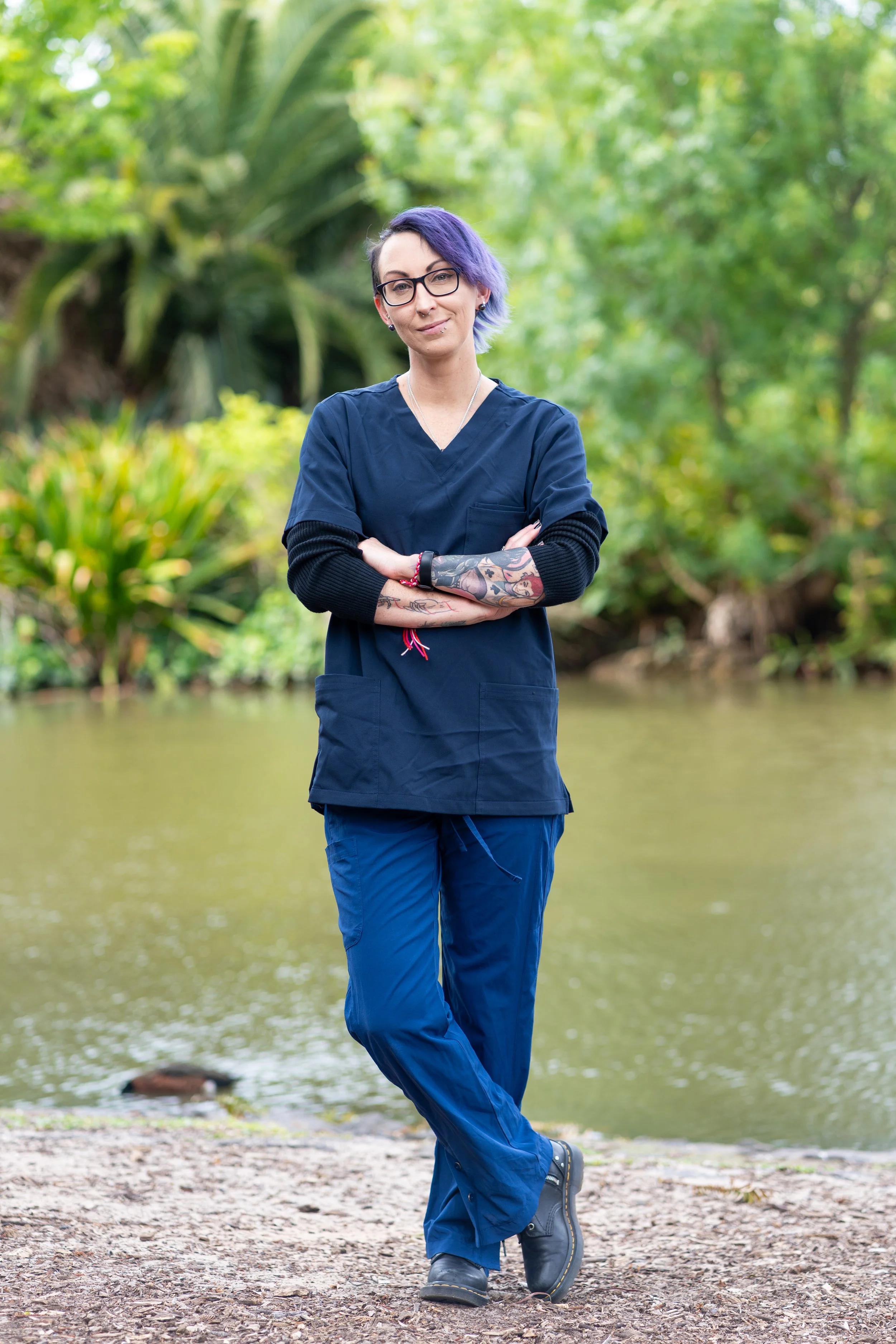
‘Intimate’ is not the word but it's nice to just have that human connection back where we're not just a faceless gown with a face mask and ‘Hi, my name is’ around our neck with a photo of us. [Patients] can actually see us and we can see them.